
Introduction
In today's fast-paced digital landscape, customer support is a critical touchpoint for businesses aiming to enhance customer satisfaction and loyalty. The advent of AI solutions has introduced transformative changes, particularly in ticket management systems. AI Ticket Yonetim is at the forefront of these innovations, offering a robust solution to streamline support operations. This article delves into the practical implementation, business value, risks, workflows, KPIs, and examples of AI Ticket Yonetim, illustrating its impact on modern customer support environments.
Understanding AI Ticket Yonetim
AI Ticket Yonetim is a cutting-edge AI-driven ticket management solution designed to automate and optimize helpdesk operations. It leverages machine learning algorithms and natural language processing (NLP) to efficiently categorize, prioritize, and resolve support tickets. By doing so, it reduces manual workload, accelerates response times, and enhances overall support efficiency.
Practical Implementation of AI Ticket Yonetim
Step 1: Integration with Existing Systems
Implementing AI Ticket Yonetim begins with the seamless integration into existing CRM systems and support platforms. This ensures that the AI solution can access historical data to learn from past interactions, improving accuracy and relevance in ticket handling.
Step 2: Configuration and Customization
The next step involves configuring the AI to align with business-specific workflows and support processes. Customization features enable businesses to tailor the solution to prioritize certain types of tickets, set response protocols, and define escalation paths.
Step 3: Training the AI
AI Ticket Yonetim requires initial training using historical ticket data. This step is crucial for the AI to understand patterns in customer inquiries and the corresponding resolutions, allowing it to replicate successful outcomes.
Step 4: Continuous Monitoring and Optimization
Post-deployment, continuous monitoring is essential to ensure the AI system adapts to evolving customer needs and business environments. Regular updates and optimizations enhance the system's accuracy and efficiency over time.
Business Value of AI Ticket Yonetim
Efficiency and Cost Reduction
By automating routine tasks such as ticket categorization and initial responses, AI Ticket Yonetim significantly reduces the burden on human agents. This leads to cost savings as resources can be allocated to more complex tasks that require human intervention.
Enhanced Customer Satisfaction
With faster resolution times and 24/7 availability, AI Ticket Yonetim improves customer satisfaction and loyalty. The AI's ability to provide consistent and accurate responses ensures a high-quality experience for customers.
Data-Driven Insights
The solution generates valuable insights into customer behavior and common issues, enabling businesses to proactively address systemic problems and improve product offerings.
Risks and Mitigation Strategies
Data Privacy Concerns
AI Ticket Yonetim involves the processing of sensitive customer data, raising privacy concerns. Implementing robust data protection measures and compliance with regulations such as GDPR is essential to mitigate these risks.
Integration Challenges
Integrating AI Ticket Yonetim with legacy systems can pose challenges. To mitigate this, businesses should conduct thorough compatibility assessments and engage experienced IT professionals during the integration process.
AI Ticket Yonetim Workflows
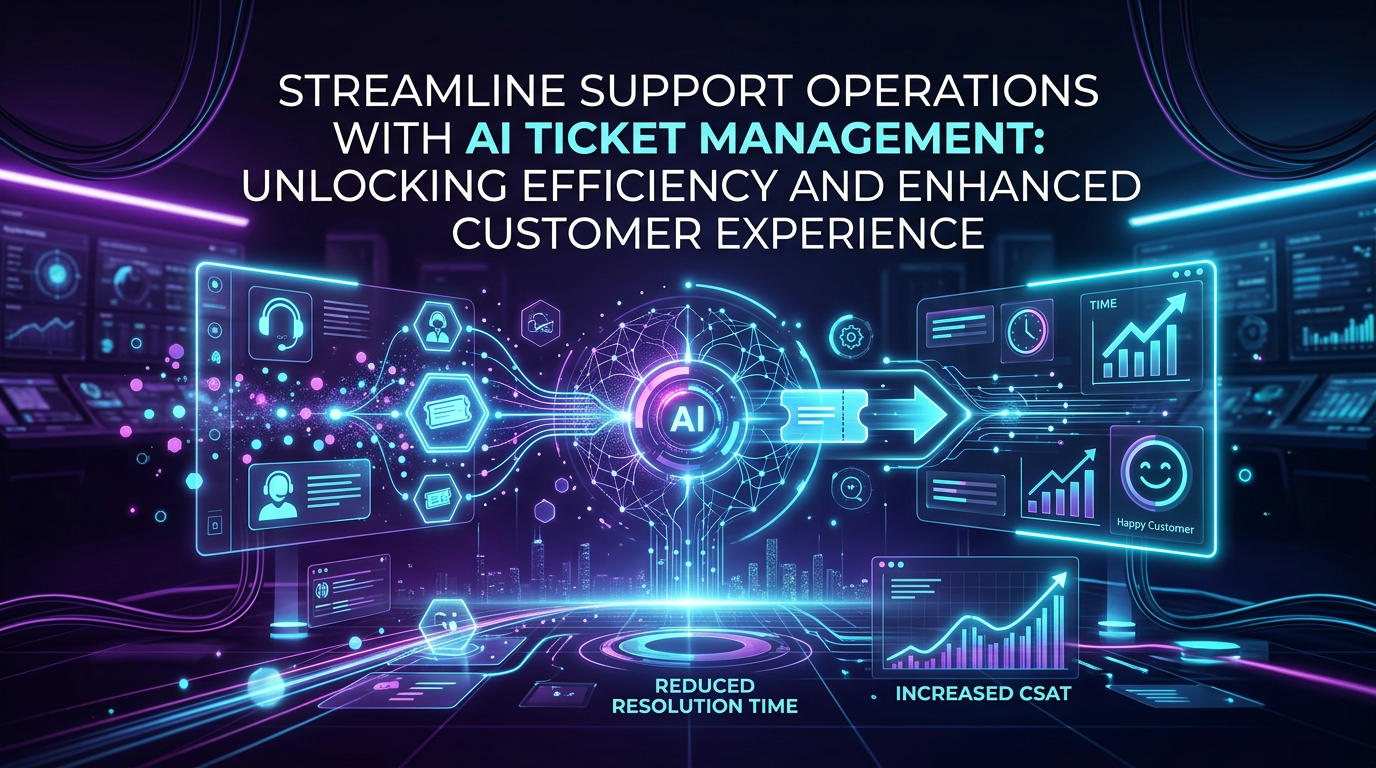
The workflow of AI Ticket Yonetim begins with the automatic categorization of incoming tickets. The AI then prioritizes tickets based on predefined criteria, such as urgency or customer value. Routine issues are resolved autonomously, while complex cases are escalated to human agents with suggested solutions, streamlining the resolution process.
Key Performance Indicators (KPIs)
To evaluate the success of AI Ticket Yonetim, businesses can track several KPIs, including:
- Average Response Time: Measures the time taken to respond to customer inquiries.
- First Contact Resolution Rate: Indicates the percentage of issues resolved during the first interaction.
- Customer Satisfaction Score (CSAT): Assesses the overall satisfaction of customers with the support experience.
- Agent Productivity: Evaluates the efficiency and workload of support staff.
Real-World Examples
Several businesses have successfully implemented AI Ticket Yonetim to streamline their support operations. For instance, a global e-commerce company reported a 30% reduction in ticket handling time and a 20% increase in customer satisfaction within three months of deployment. Similarly, a telecom provider noted a significant decrease in operational costs after automating 60% of incoming support queries.
Conclusion
AI Ticket Yonetim represents a significant advancement in the realm of customer support. By automating ticket management, it not only enhances efficiency and reduces costs but also elevates the customer experience. While challenges such as data privacy and integration exist, they can be effectively managed with the right strategies. As businesses continue to prioritize customer experience, AI solutions like AI Ticket Yonetim will play an integral role in driving support operations toward greater success.
Advanced Features and Functionalities
Natural Language Processing Capabilities
AI Ticket Yonetim leverages sophisticated natural language processing (NLP) capabilities to understand and interpret customer inquiries. This feature enables the system to comprehend the context and sentiment of a message, allowing for more accurate and relevant responses. By recognizing variations in language and intent, the AI can better address customer needs without human intervention.
Multichannel Support
The solution supports a variety of communication channels, including email, chat, social media, and phone. This multichannel capability ensures that customers receive consistent support regardless of their preferred method of communication. By consolidating interactions across these platforms, AI Ticket Yonetim provides a unified view of the customer, enabling more personalized service.
Adaptive Learning
AI Ticket Yonetim continuously learns from new data and interactions. This adaptive learning feature ensures the system remains up-to-date with the latest trends in customer behavior and support methodologies. As a result, the AI becomes increasingly effective over time, improving its ability to resolve tickets autonomously and accurately.
Future Trends in AI Ticket Management
Increased Personalization
As AI technologies evolve, there will be a greater emphasis on personalization in ticket management. Future iterations of AI Ticket Yonetim are expected to incorporate advanced data analytics to tailor support interactions based on individual customer profiles, preferences, and past interactions, enhancing the overall customer experience.
Integration with IoT Devices
With the rise of the Internet of Things (IoT), AI ticket management systems will increasingly integrate with IoT devices. This integration will enable proactive support, where AI can predict and address issues before they impact the customer. For instance, an AI system could automatically open a support ticket if an IoT-enabled appliance reports a malfunction.
Voice-Enabled Support
The future of AI ticket management includes seamless integration with voice-activated assistants. This functionality will allow customers to interact with support systems through voice commands, offering an intuitive and hands-free way to report issues and receive assistance.
Strategies for Successful Implementation
Employee Training and Engagement
An essential aspect of implementing AI Ticket Yonetim is ensuring that support staff are adequately trained to work alongside AI. Providing comprehensive training sessions can help employees understand how to leverage AI capabilities to enhance their workflows. Engaging staff in the implementation process fosters a collaborative environment, encouraging them to embrace AI as a tool that complements their skills.
Continuous Feedback Loops
Establishing continuous feedback loops is crucial for refining AI performance. By regularly collecting feedback from both customers and support agents, businesses can identify areas for improvement, making necessary adjustments to the AI system. This feedback mechanism helps maintain high standards of service and ensures the AI continues to meet evolving customer expectations.
Measuring the ROI of AI Ticket Yonetim
Evaluating the return on investment (ROI) of AI Ticket Yonetim involves assessing both quantitative and qualitative benefits. Businesses should consider metrics such as cost savings from reduced manual labor, increased revenue from improved customer retention, and enhanced brand reputation due to superior support experiences. These factors collectively contribute to a compelling business case for adopting AI-driven ticket management solutions.
- Operational Efficiency: Calculate the reduction in time and resources spent on ticket management tasks.
- Customer Retention Rates: Monitor changes in customer loyalty and repeat business post-implementation.
- Brand Perception: Analyze brand perception through customer feedback and social media sentiment analysis.
By systematically measuring these aspects, organizations can clearly understand the long-term benefits and strategic value AI Ticket Yonetim delivers.